
The prevalence of venous leg ulcers (VLUs) is up to 2% of the population worldwide, rising to 5% in adults aged ≥65 years old.¹ Although VLUs can have a significant impact on quality of life and healthcare systems resources, they may be managed with effective diagnosis, classification and treatment.² When it comes to VLU care, Essity offer the full range of products to suit your patients’ individual needs, enabling them to live their lives to the fullest.
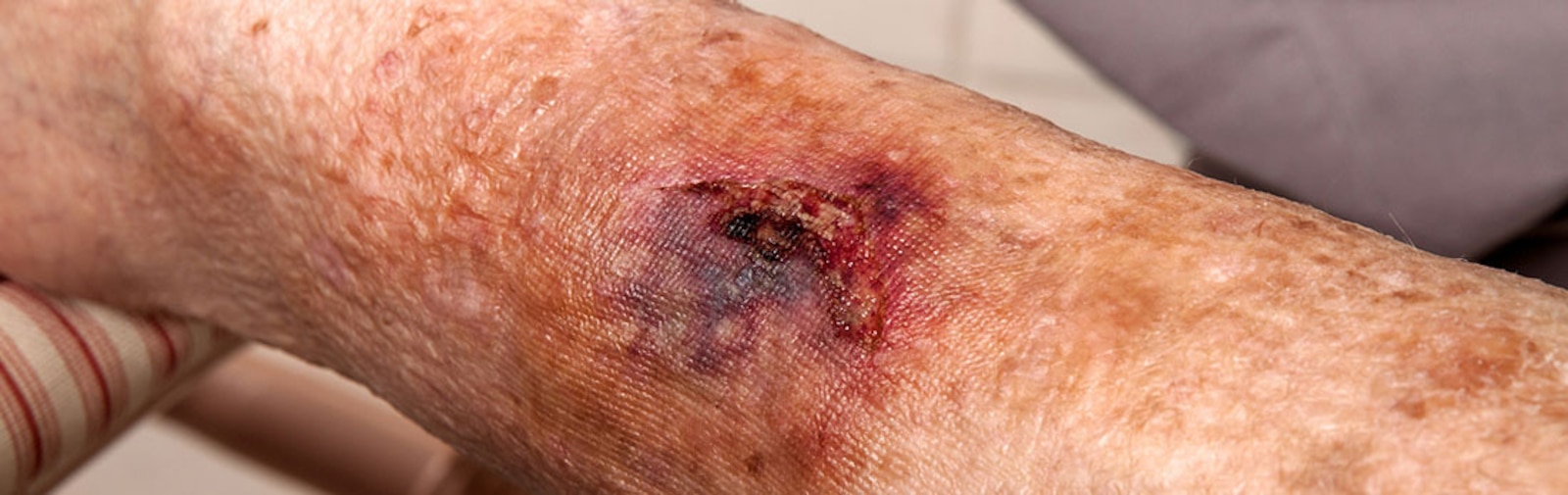
What is a venous leg ulcer?
A VLU, or venous leg ulcer, is a break in the skin below the knee, that has not healed within 2 weeks, and that occurs in the presence of venous disease.²,³ This condition is considered chronic if the ulcer has not healed within 4 to 6 weeks.⁴ Among the different types of leg ulcers, such as diabetic foot ulcers and arterial ulcers, venous leg ulcers are the most common, making up 40-85% of all leg ulcers³ and affecting up to 2% of the global population.¹ As people with VLUs may present with repeated cycles of ulceration, healing and recurrence over many months, it is essential to ensure timely diagnosis, classification, treatment and management.⁵

How venous leg ulcers affect quality of life
When a patient has a VLU, their personal and social lives may be impacted by feelings of embarrassment, isolation, anxiety, and depression.¹,² Pain, exudate, skin maceration and odors may also be present.¹,²,⁷ In the long-term, patients may have ongoing concerns around consistent discomfort and pain, the risk of wound expansion or infection, and repeated visits to the clinic.²,⁸
The economic burden of venous leg ulcers
Across Australia, France, Germany, Italy, Spain, and the UK, the direct medical costs of VLU management are estimated to be at least $10.7 billion each year.⁹
Furthermore, the cost of managing a patient with an unhealed VLU is 4.5 times more expensive than managing a patient with a healed VLU, emphasizing the importance of effective early treatment.⁹
Risk factors for developing venous leg ulcers
A range of risk factors are associated with VLU development. These may include:³,⁶
- Older age
- Family history
- Female sex
- Higher BMI, overweight or obesity
- Deep vein reflux
- Deep vein thrombosis
- Sedentary lifestyle
- Arterial hypertension
- Extended periods of standing
- Trauma or surgery to the lower limb

What causes venous leg ulcers?
The cause of VLUs is prolonged venous insufficiency.¹⁰ VLUs form when blood flow in the lower leg is impaired, for example in damaged veins.¹⁰ Veins have a one-way valve that keeps blood flowing towards the heart. When these valves do not close properly, venous reflux occurs (where blood flows in the wrong direction). Venous reflux can cause an increase in pressure in the venous system, known as venous hypertension. Over time, prolonged venous hypertension can cause tissue damage leading to VLUs.¹⁰
Chronic venous insufficiency (CVI) is a severe form of chronic venous disease, characterized by skin changes and tissue breakdown. VLUs represent the most advanced form of chronic venous insufficiency.¹⁰


References
- Raffetto JD et al. Why venous leg ulcers have difficulty healing: overview on pathophysiology, clinical consequences, and treatment. J Clin Med. 2020;10(1):29.
- Fletcher J et al. Best practice statement: holistic management of venous leg ulceration (second edition). Wounds UK. 2016.
- Chamanga ET. Understanding venous leg ulcers. Br J Community Nurs. 2018;23(Sup9):6-15.
- Harding K et al. Simplifying venous leg ulcer management. Consensus recommendations. Wounds International 2015.
- Isoherranen K et al. Lower leg ulcer diagnosis & principles of treatment, including recommendations for comprehensive assessment and referral pathways. J Wound Management, 2023;24(2 Sup1):1-76.
- Meulendijks AM et al. A systematic review on risk factors in developing a first‐time venous leg ulcer. J Eur Acad Dermatol Venereol. 2019;33(7):1241-1248.
- Kozell K et al. Assessment and Management of Venous Leg Ulcers. Registered Nurses Association of Ontario. 2004.
- Nair HK et al. Leg ulceration in venous and arteriovenous insufficiency: assessment and management with compression therapy as part of a holistic wound‐healing strategy. J Wound Care. 2024;33(Sup10b):1-31.
- Kolluri R et al. An estimate of the economic burden of venous leg ulcers associated with deep venous disease. Vasc Med. 2022;27(1):63-72.
- Fukaya E et al. Vascular disease patient information page: venous leg ulcers. Vasc Med. 2023;28(1):89-92.